Tuesday, 18 September 2018

Work Has Started on the Granny Flat


After months of work and the involvement of many consultants we obtained council approval and permits to start work.  The process we went through included soil test consultants, bushfire consultants, energy efficiency consultants, civil engineers and designers.  We also engaged a consultant to help us prepare the Development Application.  The Council queried us about land clearing but we were able to respond without engaging another consultant as we were not planning to clear any land.
Apart from the paperwork we also had to remove all the rubbish from the Granny Flat pad.   This required a lot of trips to the local tip.
We also needed to cut down and chip a large stand of lantana.  The lantana was covering a large fallen tree.  The tree was cut up and taken away, and the trunk yielded several fine slabs for milling to be used in the Granny Flat.
Part of the bushfire management procedure required that all ground litter within a 20 meter radius of the granny flat must also removed.  There was a lot of dead wattle but the larger trees could remain. 
Removing the rubbish, cutting out the weeds and clearing all the dead timber took many days of hard work.  But it has been worth the effort as can be seen in the before and after photos.

After - View to the North

View to the South

View to the West


Jen and Rog
Email:  honeydaleqld@gmail.com

Monday, 13 August 2018

An Early Spring


Timber

Many years ago, timber from the Brisbane Valley was highly sort after.  In the 1800’s there was three local sawmills in operation. With the nearby Coominya sawmill being adjacent to the railway station.  The mills are now long gone, and the bush has regenerated.

Today at HoneyDale we have eucalypt woodland with a shrubby wattle understory.  We have some beautiful tall trees, in particular - Spotted Gum, Narrow leaf Ironbark, Narrow leaf Red Gum, Pink Bloodwood and Rusty Gum.

In building our little Bush Retreat, we want to showcase the bush by highlighting the beauty of the local wood.  We will use salvaged logs to make benchtops and trim.  But to get to this stage, requires some hard work.

Selecting a nice straight log
After selecting the fallen logs, they must be slabbed using a chainsaw with a slabbing attachment. Then cut to size using a table saw and dressed using a thickness-planer.

So far, we have slabbed enough wood to make 2.5m of bench. Quite a lot more to go yet!  

But we do have a lot of fallen timber on the property, which would otherwise be left to rot.
Setting up


First slab from this log
Slabbing - its dusty work


Wednesday, 30 May 2018

Well camouflaged

Tawny Frogmouth

I could not find any Koala's this morning - but I did spot this bird soaking up the sun!

First Crop for Autumn 2018


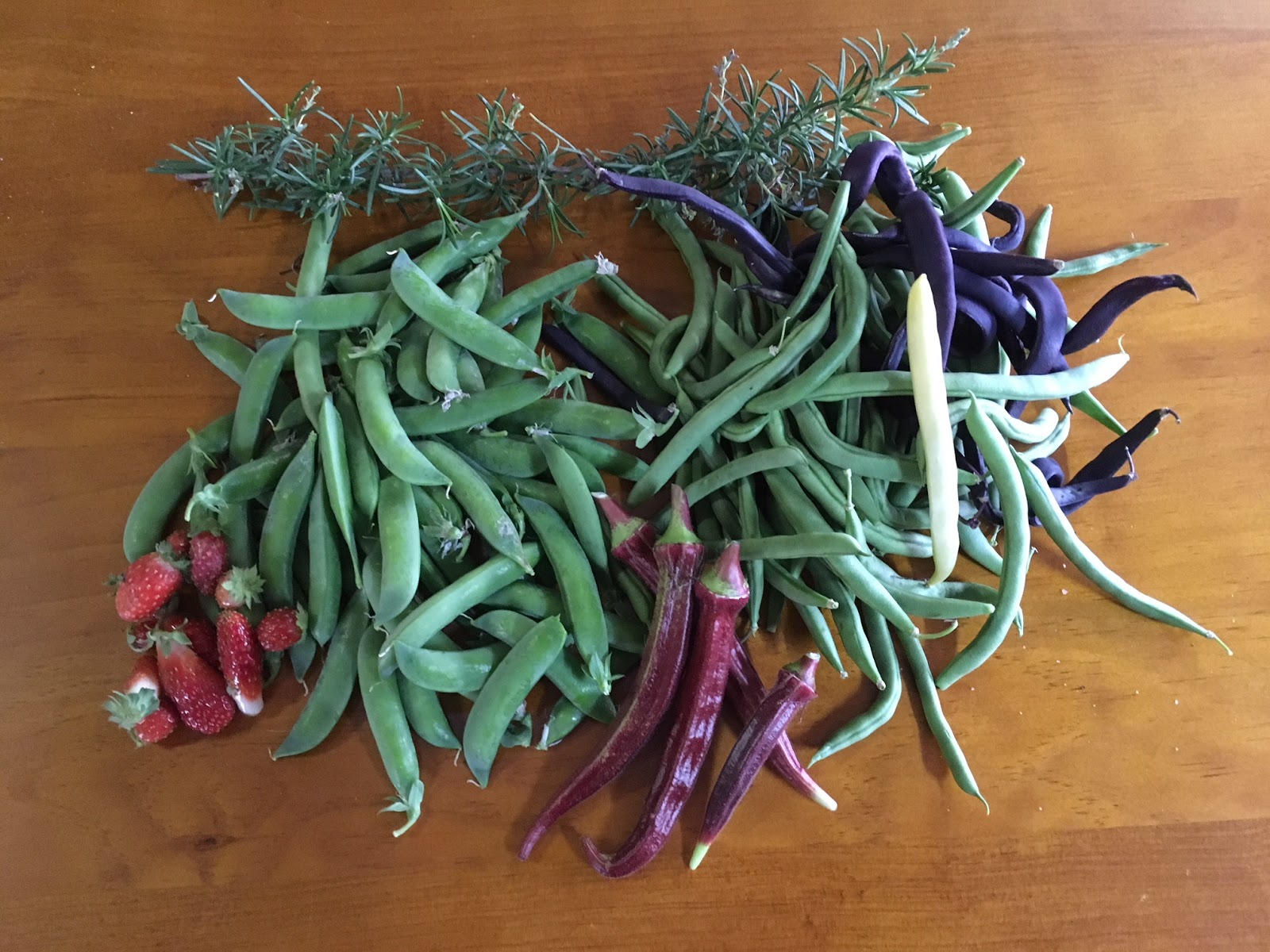
In QLD we have been enjoying a very mild Autumn, with Daytime temperatures in the mid 20's and night time rarely dipping below 10 degrees.  As a result the garden looks a delight.  Below photo's are of our first pickings - fresh greens and the odd strawberry for breakfast.


Plenty of beans and peas
Ready to pickle
The Okra is starting to flower and we have planted plenty. So soon we will be adding Okra to our Autumn harvest.

A flowering beauty
Planted out - Red & Green Okra varities

Each season we experiment a little - and learning heaps along the way! 


Jen and Rog
Email:  honeydaleqld@gmail.com


Monday, 21 May 2018

What we have learnt about growing veggies


We have had good success in growing tomatoes, lettuce, rocket, peas and beans in Brisbane and so we thought it would be easy to transfer this success to Honeydale.


The previous owners had a small garden and we started by ripping the ground, applied gypsum to break the clay up, spread lots of compost we made using our mulcher and gave the garden a good working over with the rotary hoe.

During our first growing season we had plenty of Zucchinis and tomatoes but no eggplants or capsicums.

We found that growing tomatoes in the shade housed produced a large amount of foliage but no fruit.

Last growing season we had much more success growing tomatoes, eggplant and capsicums on outdoors with a trellis for support.

Our first planting of rhubarb went gangbusters but got root rot and died.  We replanted rhubarb in raised beds and we are have had several good harvests.  The crowns are splitting so we will be digging them up in the dormant seasons for replanting.
Rhubarb

Last year we planted a test bed of broad beans and we had a good crop.  This year we mass planted broad beans and have been rewarded with masses of flowers. Hopefully the flowers will turn into a bumper crop of broad beans.

Our best success appears to come from using heritage climbing beans and peas.  We constructed a trellis and planted older varieties of climbing peas and beans.  The purple climbing variety did not take well the green variety more than made up for the short fall.  We have had four pickings from the green beans and they are still flowering.  The beans are slower growing but they have plenty of pods and we are not too far away from having fresh peas.
Climbing Beans
When the climbing peas and beans have finished we plan to rest the soil, put down some fertiliser and use the trellis for our summer tomatoes.
Climbing Peas

Pea Pods
Okra is a hardy vegetable used in African and southern US cooking.  Last year we had good results with a test planting.   This year we planted a larger garden bead and have been rewarded with sturdy plants with lots of flowers.
Okra Pods forming
This year we planted a test bed of soya beans, soya beans can be used for a variety of dishes but we plan to take the pods and boil them to eat as edamame to have with drinks or as a side dish.
Soya Beans
We still grow herbs and lettuce in the shade house.  However, the shade house is slowly being taken over by strawberries, there are now have two rows of the plants and we get a steady crop of sweet red berries to have with desert or on our breakfast yogurt.
Fresh Strawberries
Last year we over ordered garlic and it got off to a great start.  The year wore on and not a single bulb formed.  We researched the reasons and found that we had planted cool weather garlic, it needs cold weather to form bulbs.  This year we got two varieties, one sourced from far north Queensland and another from south east Queensland.

This year's garlic

One of our resident Koalas on the job!


Nothing beats home grown!


Jen and Rog
Email:  honeydaleqld@gmail.com